

Samsung Seems to Be Listening: Notes from the 2026 Samsung Dealer Event in Mississauga
Samsung Seems to Be Listening: Notes From the 2026 Samsung Dealer Event in Mississauga
FloatLayer OLED, the Frame without a One Connect Box, and Micro RGB at real-room sizes — what the 2026 lineup actually means for premium GTA buyers.
Samsung’s Canadian headquarters in Mississauga hosted a dealer-only event this week, and the 2026 lineup on display made one thing clear: Samsung appears to be paying close attention to what premium buyers and the installers who serve them have been asking for. Less compromise between picture quality and design. Fewer parts to hide behind a finished wall. More flexibility in how high-end televisions actually get set up in real homes across the GTA. We walked out with plenty of hands-on time on the new S95H OLED, the rethought Frame lineup, and the expanded Micro RGB series — and a few observations worth sharing with homeowners weighing a premium television purchase this year.
What’s new with Samsung’s 2026 OLED TVs?Samsung’s 2026 OLED lineup — the S85H, S90H, and S95H — adds higher peak brightness, a refined glare-reduction coating across the S90H and S95H, and Samsung Art Store access on the flagship S95H. It’s a first for the company’s OLEDs.
Does the 2026 Samsung Frame TV still use the One Connect Box?The standard 2026 Frame has built-in ports on most sizes and drops the One Connect Box. Only the 43-inch and 50-inch models include it. The Frame Pro still ships with the Wireless One Connect Box on every size.
What is the S95H FloatLayer design?A metal bezel that surrounds the panel and is built to mount the TV flush to the wall so it reads as a framed display. The S95H is also the first Samsung OLED with Art Store access, making it a hybrid between a flagship cinema OLED and a lifestyle Frame TV.
What is Samsung Micro RGB?A backlight technology that uses independently controlled red, green, and blue LEDs instead of a white backlight with colour filters. Samsung launched it last year on a 115-inch flagship. In 2026, it expands into more practical sizes — the R85H and R95H series — from 55 inches up.
Samsung seems to be listening
The strongest impression from the dealer event was not about a single product. It was about a pattern. Across the OLED, Frame, and Micro RGB lineups, Samsung is reducing the number of trade-offs a premium buyer has to accept.
Until recently, design-conscious homeowners in Toronto and the GTA often faced a choice. Go for picture quality and live with a television that looks like a black rectangle on the wall when it’s off. Go for design integration — the original Frame — and accept a picture that was good but not flagship-level. Want a flush-mount install? Plan around a separate connection box hidden behind drywall or inside a cabinet.
Samsung’s 2026 direction narrows each of those gaps. The S95H borrows from the Frame playbook with a floating-frame design and Art Store access. The standard Frame moves its ports into the television itself on most sizes, making a clean install simpler in an already-finished room. The Frame Pro keeps wireless flexibility for rooms where the panel can’t be near the source gear. And Micro RGB, which debuted at a $30,000 USD price point on a 115-inch screen, now lives in sizes a real living room can take.
The S95H OLED: the product that actually changed my mind about OLED design
Of everything on the demo floor, the S95H was the model I expected to be unmoved by. OLED flagships tend to be iterative year-over-year. This one is not.
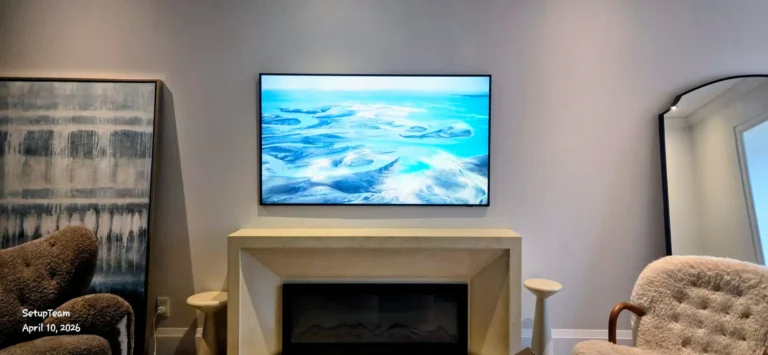
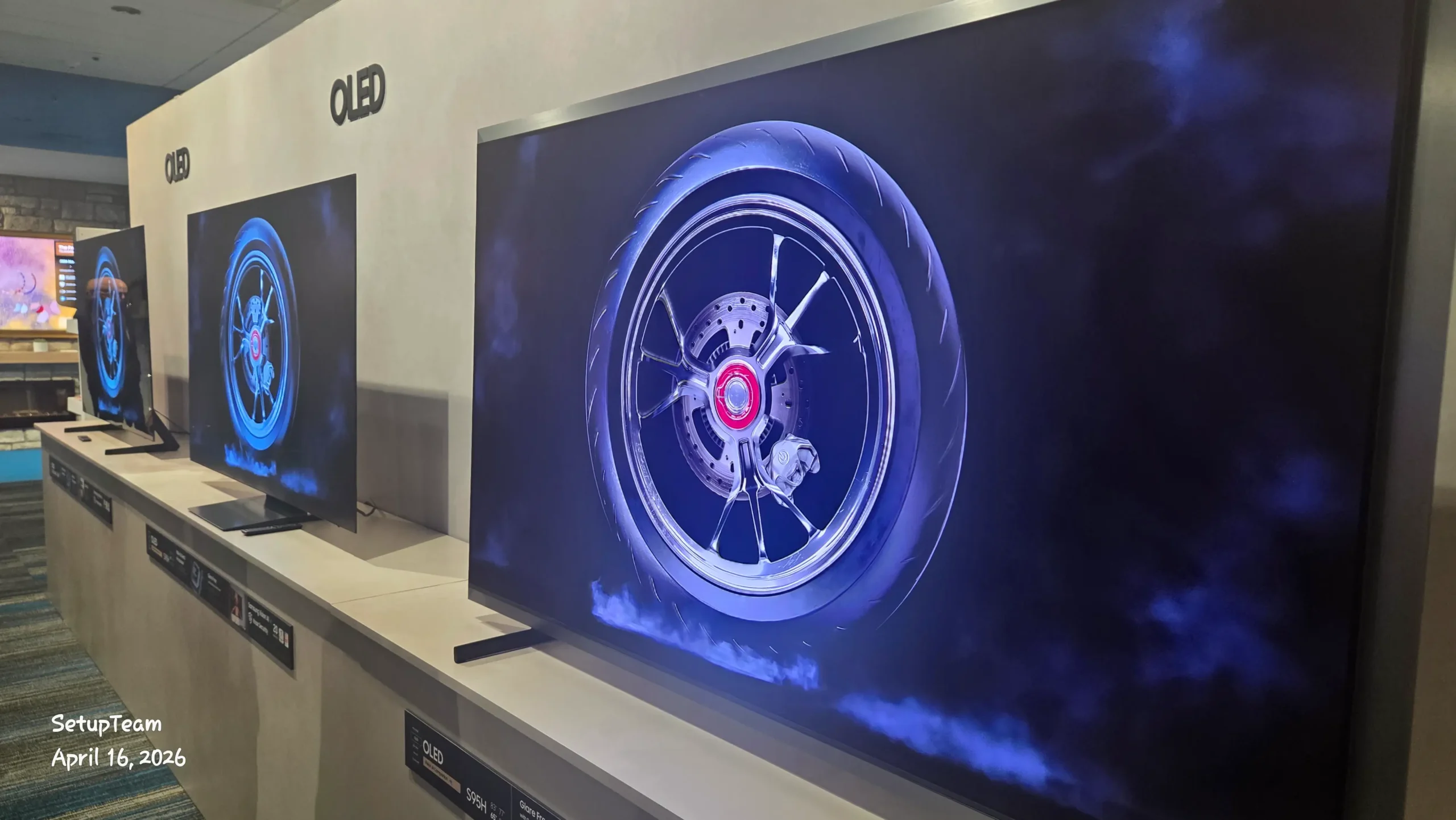
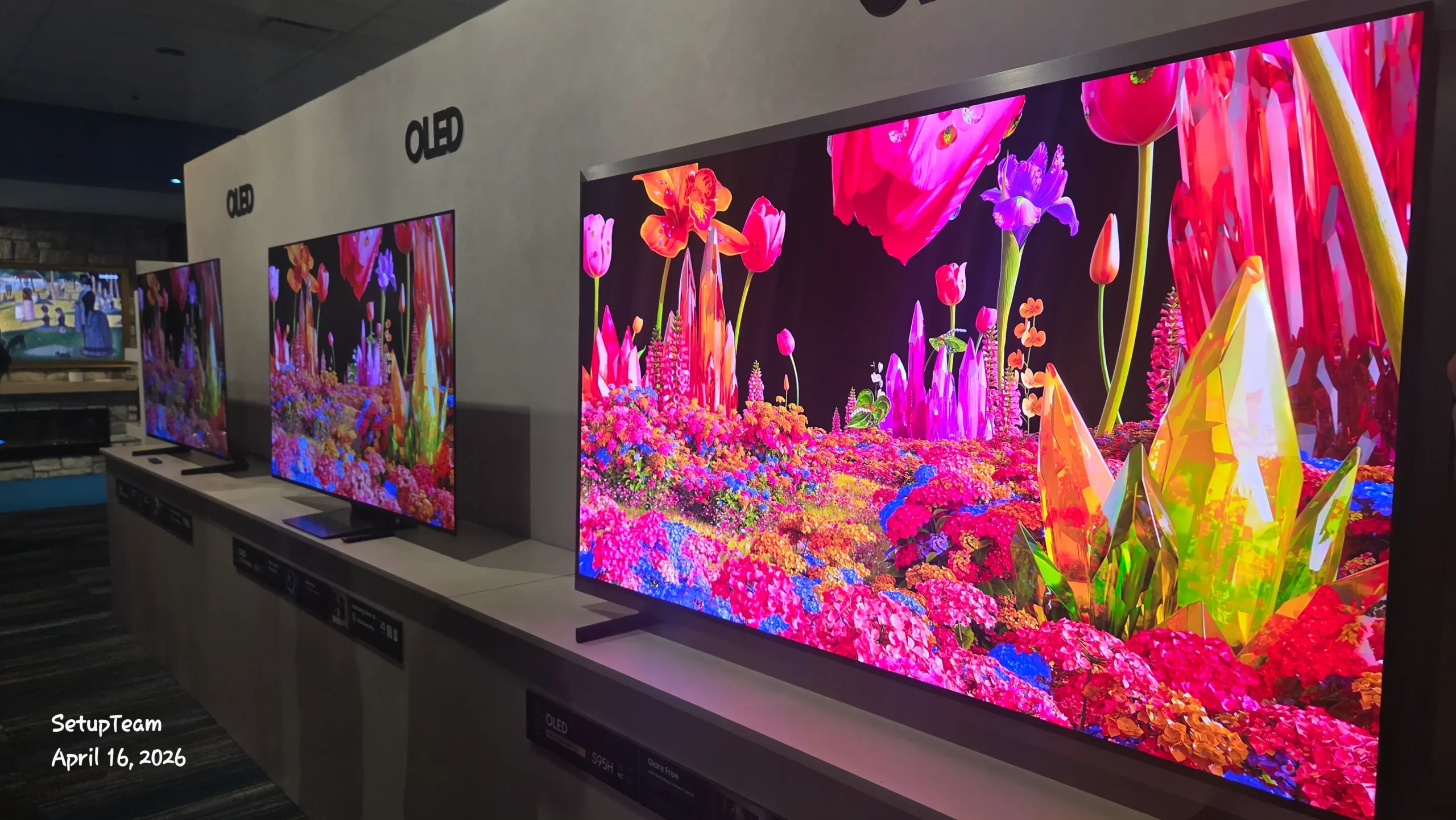
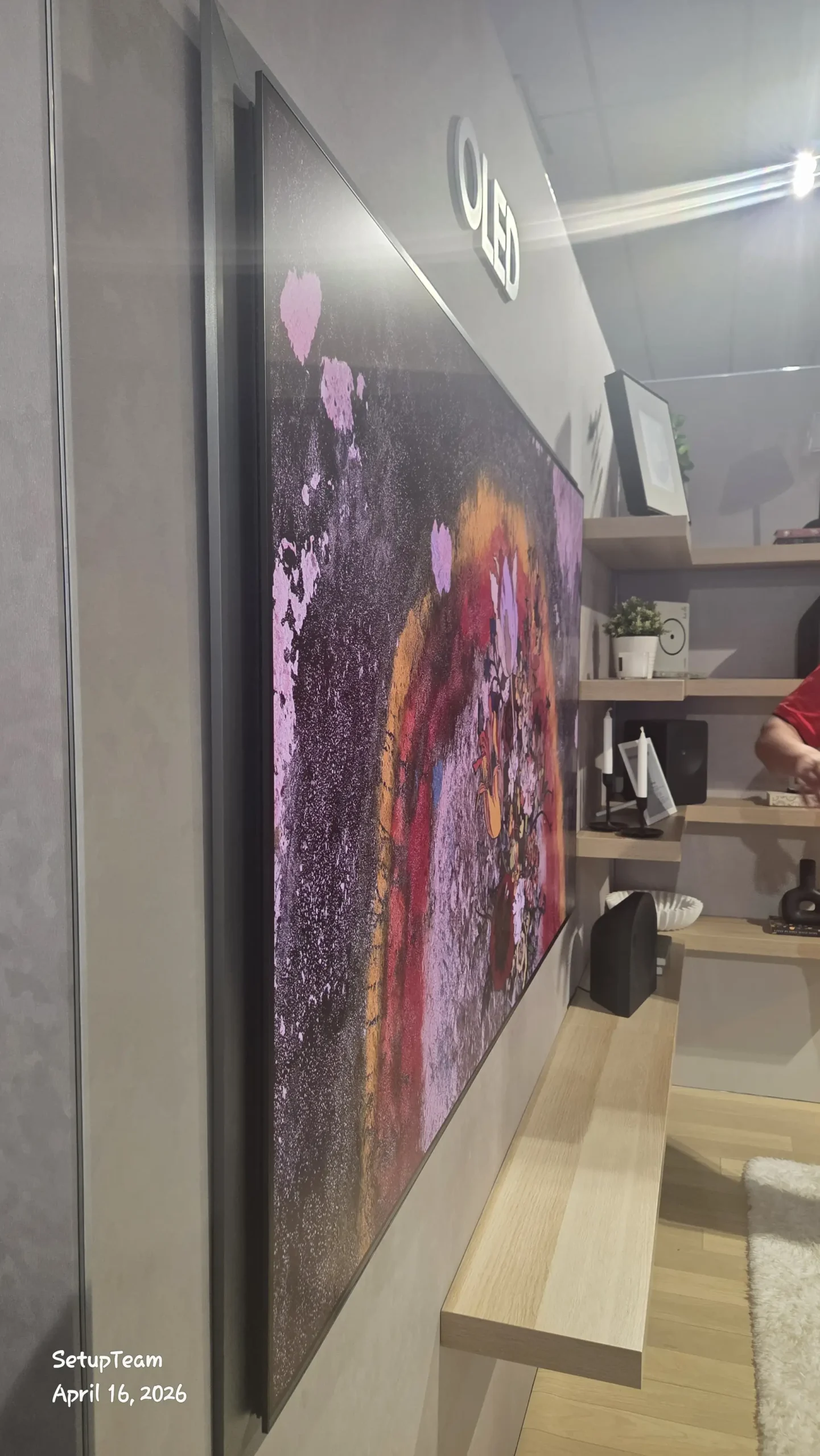
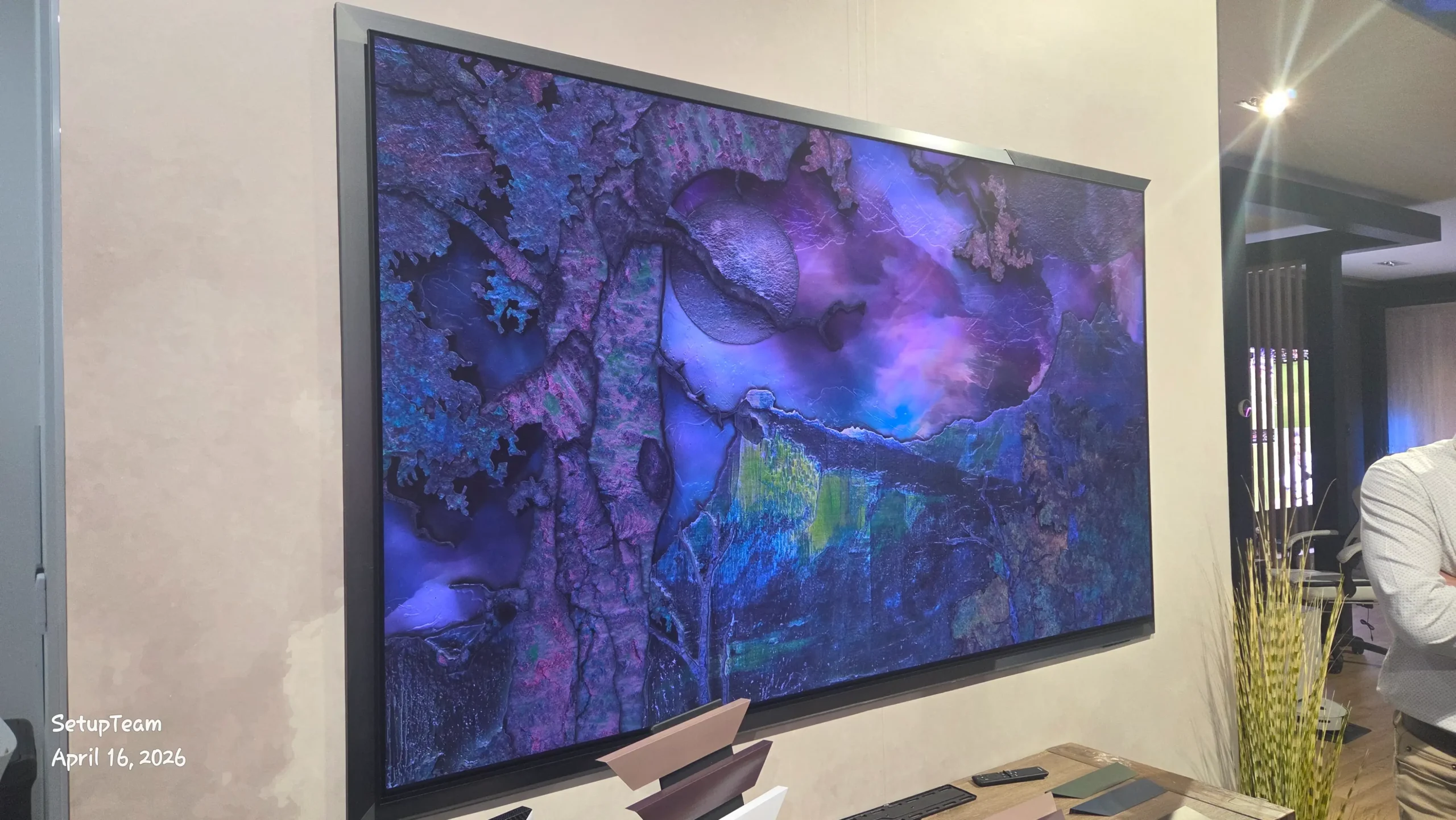
The FloatLayer design is a metal bezel around the panel paired with a flush-mount system that pushes the TV tight against the wall so the frame reads as the edge of a framed piece. In person, on a properly flat wall, the effect is close to what the renderings suggest. The screen appears to float slightly inside the frame. The 65-inch unit I spent time with was visibly brighter than its predecessor — Samsung quotes a 30% peak brightness increase over the 2025 S95F, and hands-on reviews have measured peak HDR brightness above 2,500 nits in a 10% window. That is the brightest OLED I have seen on a show floor.
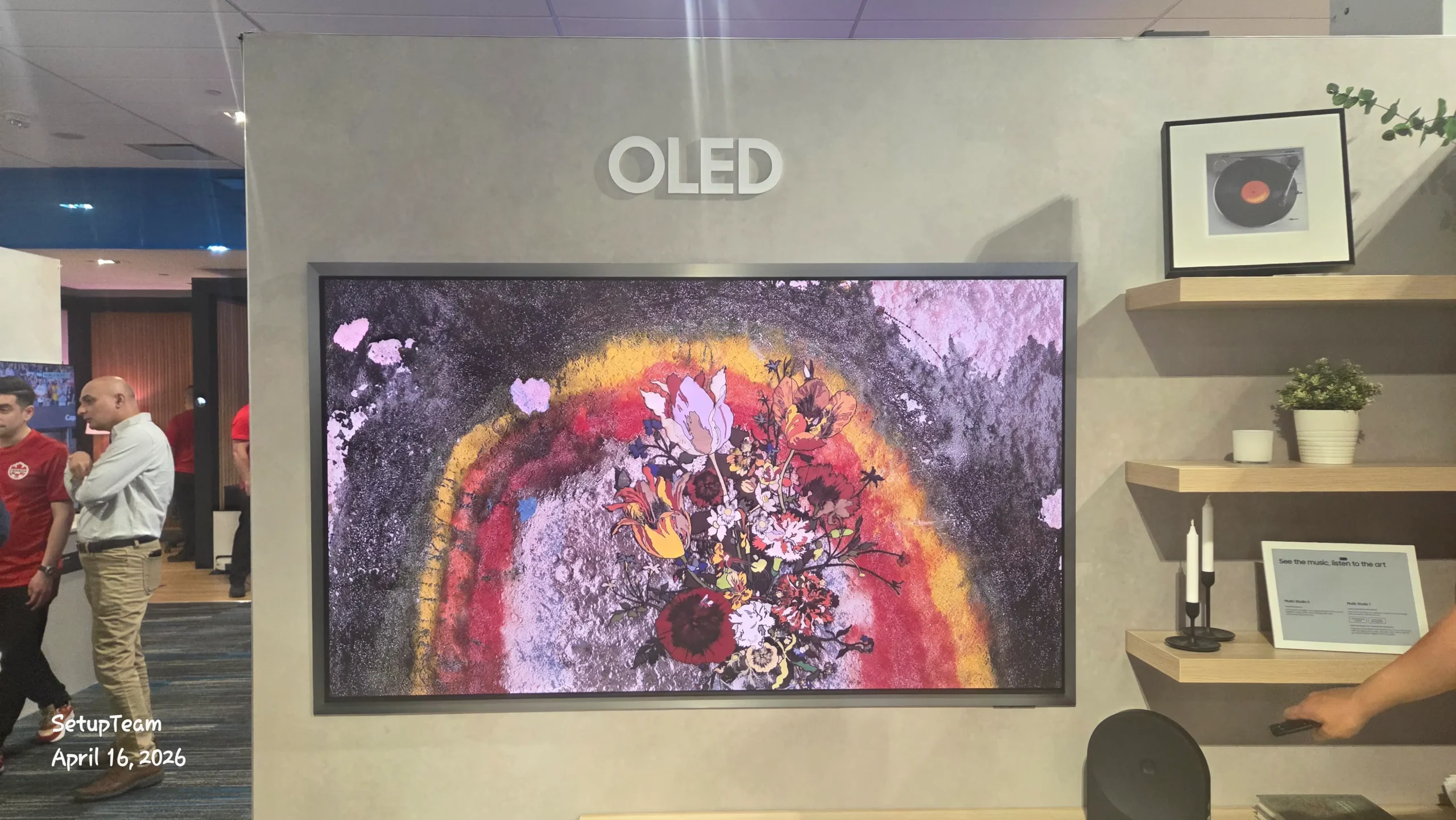
The more meaningful change is what Samsung did with software. The S95H is the first Samsung OLED that supports the Samsung Art Store and Art Mode — the features that made the Frame a hit with interior designers. With FloatLayer and Art Store together, the S95H stops being a flagship TV with a dark-screen problem when it’s off. It becomes a display that earns its wall space all day.
For the homeowners we work with in Oakville, Forest Hill, and Toronto condos who have been asking for Frame-level aesthetics without a Frame-level picture compromise, this is the closest Samsung has come to giving them both in a single product. Our Samsung Frame TV installation page covers how we handle flush-mount builds, and the same wall-preparation principles apply to the S95H.
One caution from the install side: FloatLayer works because the TV sits tight to the wall. It is not forgiving of a wall that is not dead-flat. Gaps show. On older plaster walls common in Toronto’s century homes, a flush mount often needs a drywall shim or a wall preparation step before the panel goes up.
The Frame drops the One Connect Box on most sizes — and that matters more than it sounds
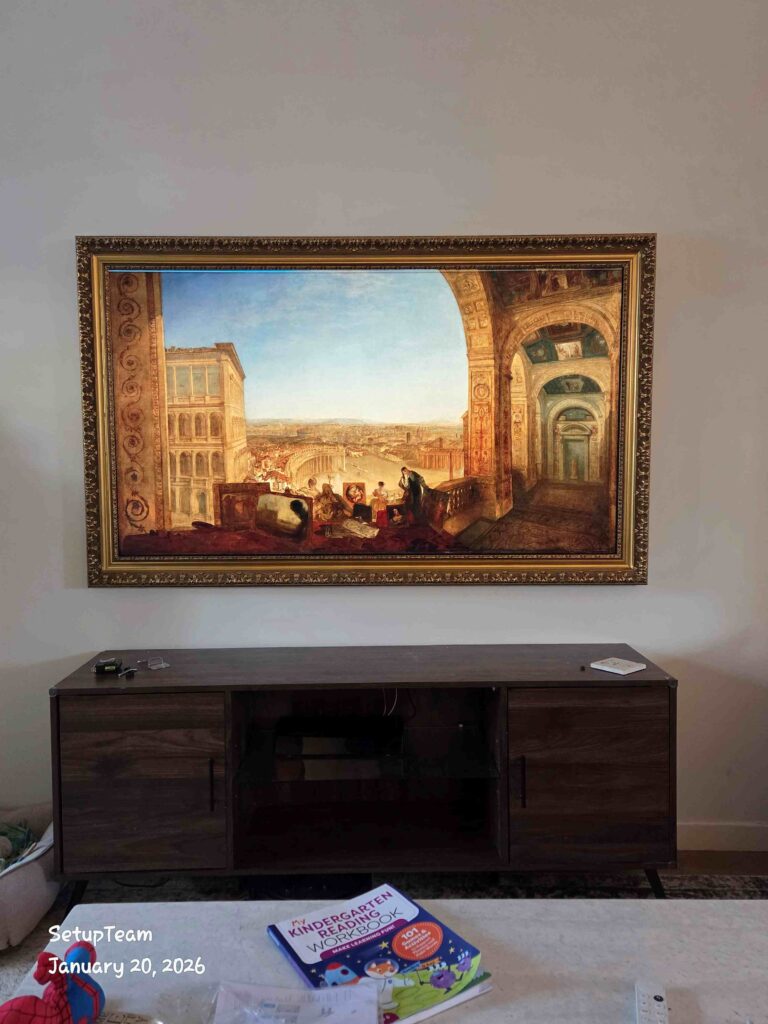
The update I think dealers and installers will appreciate most is the least glamorous one. The standard 2026 Frame consolidates its connections back onto the television itself for the sizes most GTA buyers actually consider. The 55, 65, 75, 85, and 98-inch models now have built-in ports directly on the panel. The smaller sizes — 32 through 50 inches — retain the wired One Connect Box. The Frame Pro is a separate category entirely: it keeps the Wireless One Connect Box on every size, which is the right architecture for rooms where the source equipment cannot sit adjacent to the screen. For a closer look at how those two install paths actually differ, our Samsung Frame TV installation guide covers the wall and wiring decisions that come up before any drilling starts.
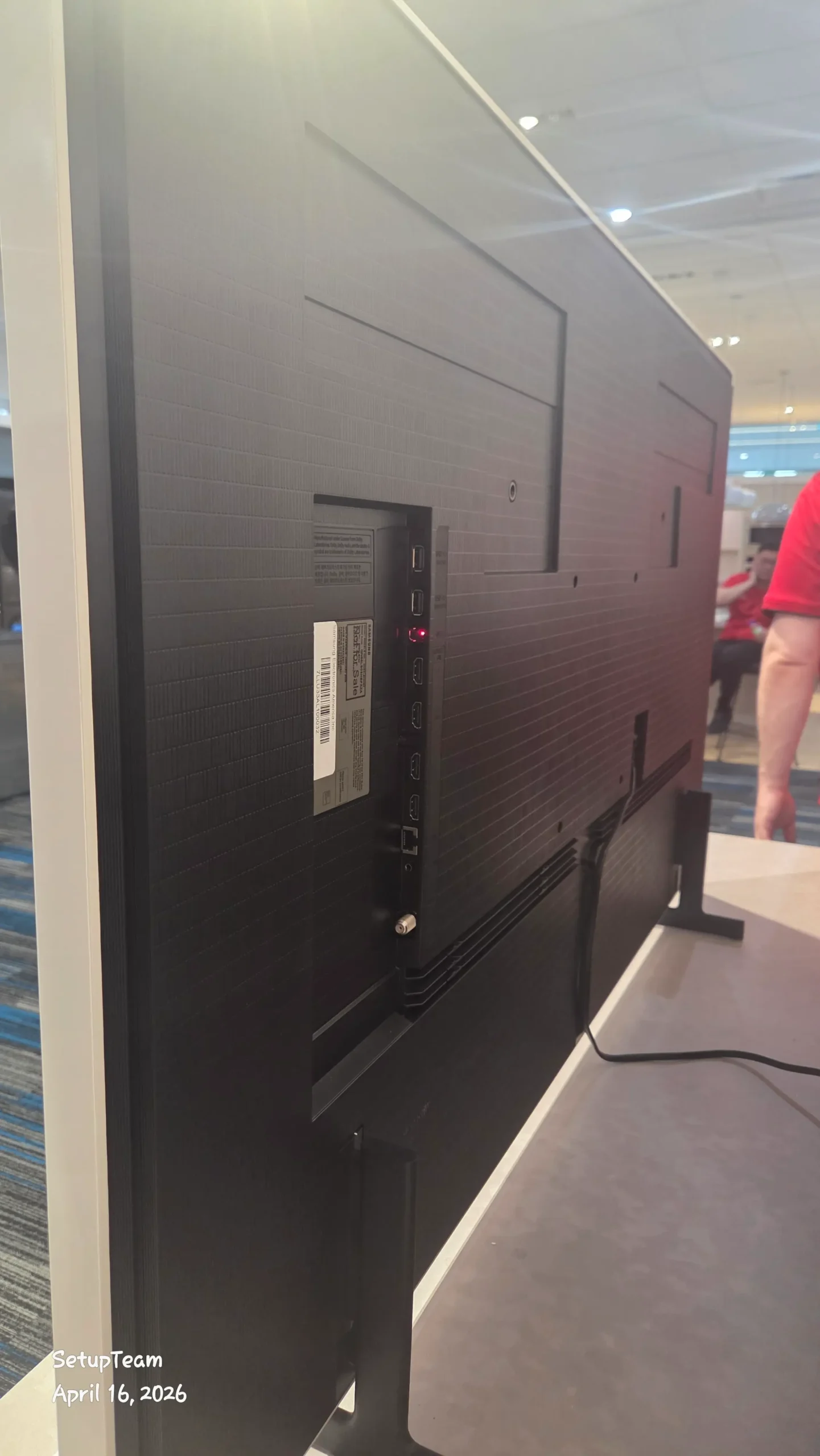
For a buyer walking past a Samsung display, this reads as a minor spec change. For an installer, it’s a real simplification of the build. The original Frame’s appeal was the slim profile and the art aesthetic. But the One Connect Box introduced a second problem: where do you put the box? In a new build with an AV closet wired back to the TV location, it is fine. In an already-finished Richmond Hill living room with drywall and no closet within cable reach, it becomes a problem. Either you cut a low-voltage recess into the wall, or the box lives visible in a media cabinet that partly defeats the purpose of choosing a Frame in the first place.
Moving the ports into the television removes that problem. You still get the slim profile. You still get the Slim Fit Wall Mount in the box. You still get Art Store access and the customizable bezels. And the install is effectively the same as a standard flush TV wall mount. Fewer parts to plan around, fewer surfaces to hide, cleaner result.
Samsung also added back-stoppers to the 2026 Frame that make it easier to plug and unplug cables without pulling the TV off the wall — the kind of detail only someone who has actually mounted a Frame would think to change. That small feature tells you who Samsung was listening to.
The Frame Pro keeps the wireless box — and that’s the right call
Samsung did not eliminate the One Connect Box. It moved it out of the standard Frame and kept it, in wireless form, for the Frame Pro. The 2026 Frame Pro ships with a Wireless One Connect Box that now uses Wi-Fi 7 and, per Samsung, transmits through a wall to the panel up to 30 feet away. The Pro retains the Neo QLED backlight with edge-lit Mini LED, and the Micro HDMI port now supports eARC for a soundbar connection.
This is the right split. Not every premium install wants the source equipment near the TV. A great room with a source rack across the room, a multi-zone home cinema setup, or a custom cabinet that can’t sit adjacent to the panel still benefits from the wireless box. Having both options in the Frame family — built-in for simpler rooms, wireless for complex ones — is what flexibility looks like in practice. One decision that comes up alongside it is mount type. Most installers push full-motion mounts by default. We generally do not — and the reason is explained in our guide on fixed, tilt, and full-motion mounts. For a Frame Pro in a finished room, a flush or tilt mount almost always produces the cleaner result.
Micro RGB is finally a product real homes can install
When Samsung launched the first Micro RGB TV in 2025, the MR95F, it was a 115-inch flagship priced around $30,000 USD. The 2026 lineup brings Micro RGB into sizes a typical premium living room can accept: 55, 65, 75, 85, and 115 inches, with a 100-inch arriving later in the year. The R95H flagship starts near $3,200 USD for the 65-inch size. Canadian pricing and availability usually track a few weeks behind U.S. dates and tend to land higher once converted, so the actual GTA number is a moving target until Samsung Canada posts it.
The technology is worth understanding. Micro RGB replaces the white or blue backlight in a conventional LCD with independently controlled red, green, and blue LEDs. In practice, that means a wider colour gamut and higher sustained brightness than a standard Mini LED screen, without the burn-in risk that still exists with OLED. For a bright south-facing GTA condo — Mississauga high-rises, downtown Toronto towers, or anywhere with floor-to-ceiling south exposure — Micro RGB gives you a top-tier picture in the kind of room that has always been a weak spot for OLED.
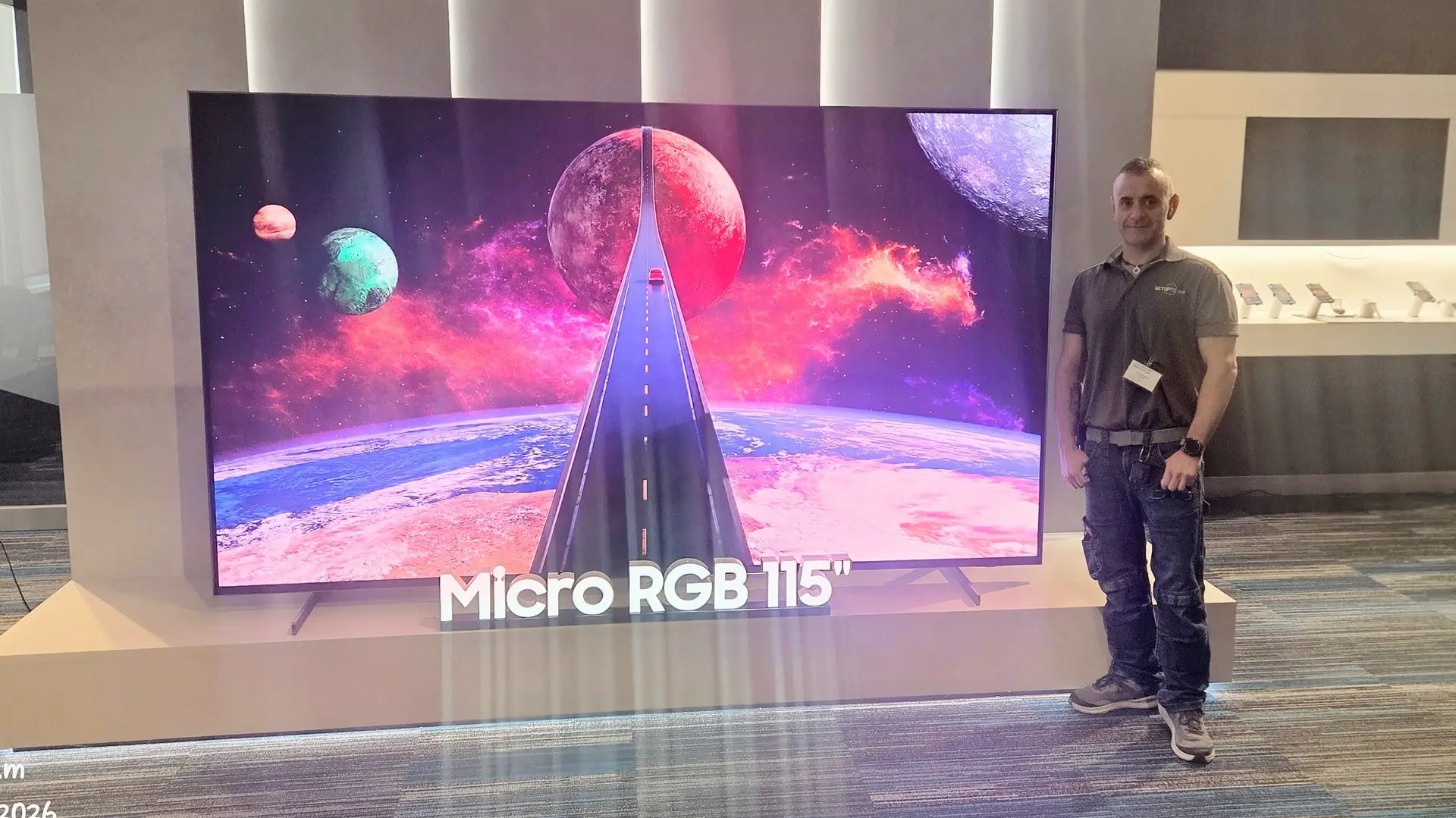
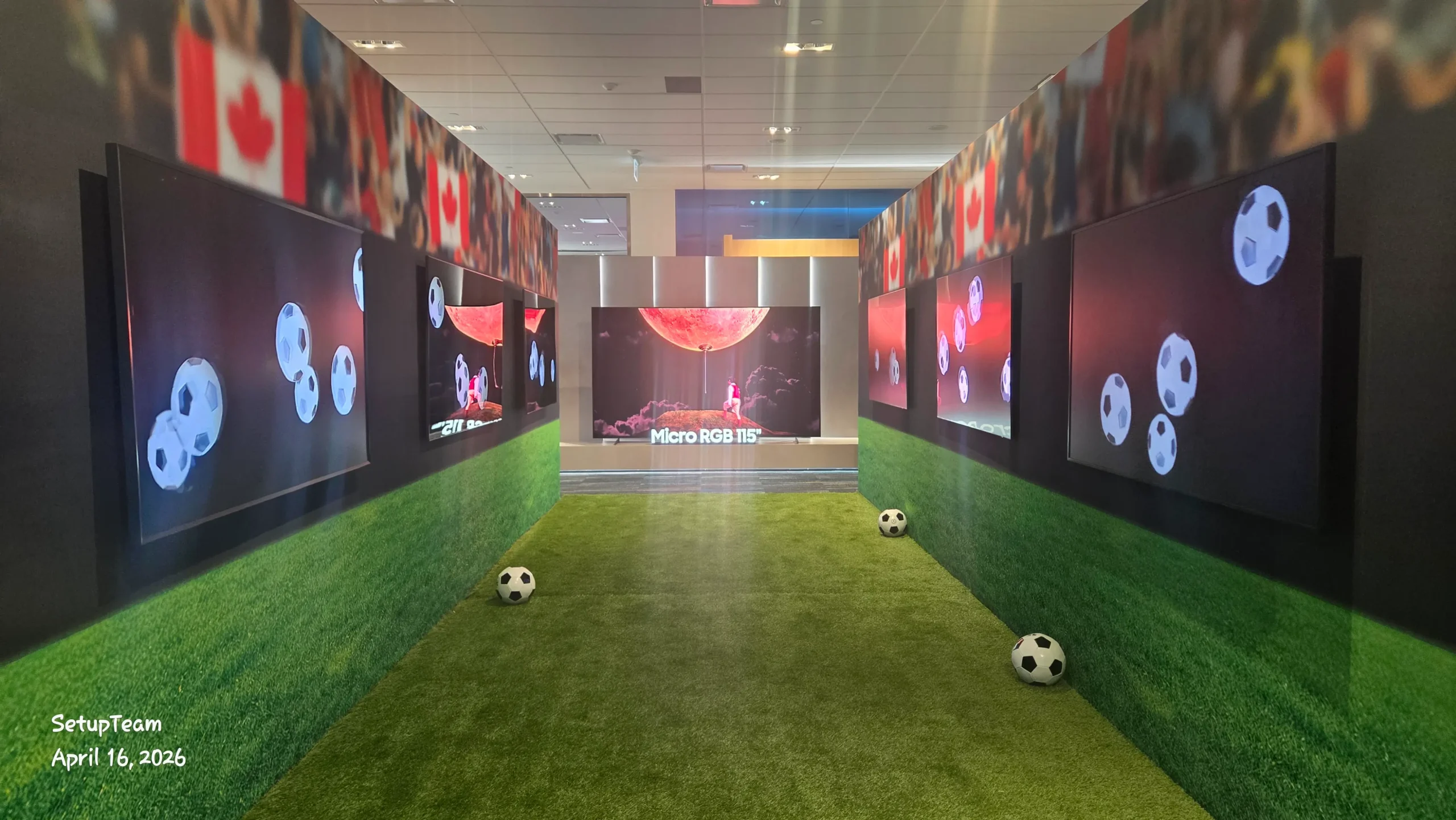
Seeing the 115-inch R95H in a dedicated demo hallway made the scale argument for itself. At that size, Micro RGB stops being a conventional television and starts behaving like an architectural element — which is how Samsung is positioning it in the R95H’s Timeless Frame enclosure. For Oakville new builds or large Richmond Hill great rooms, this is the first time a screen of that scale has had the colour performance to justify the wall it occupies.
Why a dealer-level conversation is different from a showroom conversation
One of the reasons Samsung runs dealer-only events in Mississauga is that dealers see these products differently than a retail shopper does. We are thinking about the wall the TV is going on, the room it will live in, the source gear that has to get signal to it, and the homeowner we will still be calling two years from now when a software update changes something.
A Samsung television bought through a dealer is the same product — same panel, same warranty, same firmware — as one bought at a big-box store. What changes is the conversation around it. A dealer consultation starts with the room and works backward to the product. Is this wall flat enough for FloatLayer, or should we specify the S90H and skip the flush-mount ambition? Is the source equipment within 30 feet and clear-enough line-of-sight for the Frame Pro’s wireless box, or does this install call for a built-in Frame and a runback to an AV closet? Is the ceiling height in this Oakville great room better served by an 85-inch OLED or a 100-inch Micro RGB? These are not questions a sticker on a demo unit answers.
We are a registered Samsung dealer and we install across Toronto and the GTA every week — condos in King West, heritage homes in Rosedale, new builds in Oakville. That field time is what shapes the advice we give. It is different from what a knowledgeable retail associate can offer because it is connected to the rest of the install: the mount, the wiring, the source equipment, the smart-home system the TV has to work with.
What premium GTA buyers should actually take from all this
If you are shopping a premium Samsung television in 2026, three things are different from a year ago.
First, you have less reason to choose between cinematic picture quality and a TV that earns its wall space visually. The S95H narrows that gap more than any OLED Samsung has released.
Second, if you are mounting a Samsung Frame TV in an already-finished room, the 2026 standard Frame is likely easier to install cleanly than the model it replaces.
Third, if you want a very large display in a bright room — the kind of downtown Toronto condo with floor-to-ceiling south-facing windows, or a great room with three walls of glass — Micro RGB is now a realistic option. OLED will still produce the best picture in a controlled-light room. Micro RGB will likely produce the best picture in yours.
A closing observation
Events like the one at Samsung’s Mississauga office exist because a display’s spec sheet does not tell you how it actually performs on a wall in a real room. What we saw across the 2026 lineup was a company responding to that reality — building televisions that behave better in the homes they are going to live in. That kind of product direction makes the conversation with a premium buyer easier to have, and the install that follows easier to get right.
Frequently Asked Questions
Samsung’s Canadian headquarters in Mississauga hosted a closed event for registered Samsung dealers, with hands-on time on the 2026 OLED, Frame, and Micro RGB lineups and technical briefings from Samsung’s product team. Attendance was limited to authorized dealer representatives.
No. The S95H is Samsung’s flagship OLED for 2026 and uses a QD-OLED panel built primarily for picture quality. It borrows design ideas from the Frame — the metal bezel, the flush-mount look, Art Store access — but the underlying display is a cinema-grade OLED, not the Neo QLED panel used in the Frame Pro.
No. The 2026 standard Frame has built-in ports on the 55, 65, 75, 85, and 98-inch sizes. Smaller sizes — 32 through 50 inches — retain the wired One Connect Box. The Frame Pro ships with the Wireless One Connect Box on every size.
Samsung rates the 2026 Wireless One Connect Box at up to 30 feet and says it can transmit through a wall, using Wi-Fi 7. Real-world range depends on wall material — poured concrete walls common in downtown Toronto condos absorb more signal than drywall.
No. MicroLED is a self-emissive display where each pixel is its own LED. Micro RGB is a backlight technology — the LCD panel still has a backlight, but the backlight uses independently controlled red, green, and blue LEDs instead of white ones with colour filters. The result is a wider colour gamut and higher sustained brightness, but it is architecturally different from MicroLED.
The R85H and R95H series are available in 55, 65, 75, 85, and 115-inch sizes, with a 100-inch model arriving later in 2026. This is a major expansion from the single 115-inch Micro RGB model that defined the category in 2025.
No. A Samsung television bought from an authorized dealer carries the same Samsung Canada warranty as one bought from a big-box retailer. What differs is the surrounding service — product recommendations tied to the actual install, installation planning, and ongoing support.
FloatLayer is a metal bezel that surrounds the OLED panel and sits flush to the wall, creating a framed appearance. It works best on a dead-flat wall. On older plaster walls common in Toronto’s century homes, or walls with visible texture or unevenness, a flush mount often needs a preparation step — a shim, a skim coat, or a mounting surface assessment — before the TV goes up cleanly.
Yes. The S95H supports eARC on one HDMI port for high-bandwidth audio to a soundbar or AV receiver. It also supports Dolby Atmos and Samsung Q-Symphony for use with compatible Samsung soundbars.
No — it is part of the television’s construction on the 2026 model. Samsung has indicated it may explore making the backing optional in future revisions, but the S95H ships with the FloatLayer as a fixed element. Optional colour bezels are expected for swapping finishes.