

Network Installation for Houses Already Built in Toronto
The house is finished, the walls are closed, and you still want a wired jack in the office. We fish Cat6 and Cat6A through existing walls and ceilings, add in-wall and outdoor speaker wire, cable the access points, and land every run on a labelled panel. Homes, condos, offices, and commercial spaces across the GTA.
How do you add Ethernet to a house that is already built?
We fish the cable through the wall cavity you already have. A tech cuts a plate-sized opening where the jack will sit, drops a glow rod down the stud bay from the attic, the basement, or a closet above, pulls Cat6 to the opening, terminates both ends, and tests the run. The walls stay closed apart from that one cut. Search “network installation near me” and you mostly get internet providers and IT support desks. We drive to the house in Toronto and pull Cat6 through the finished wall, which is what people call us about.
Cat6 and Cat6A Fished Into Finished Walls
Drops added to rooms that never had one: the office above the garage, the basement TV wall, the bedroom someone turned into a studio. Cat6 is the default: it carries 10 Gbps up to about 180 feet, which covers the runs a house needs. Cat6A goes in only on longer runs, buried runs and feeds to outbuildings. Both land on a keystone plate at one end and a patch panel at the other.
Access-Point Drops Added After the Fact
Ceiling and wall access points want a wired connection back to the switch, and a house that was never wired for them still has routes. We work down from the attic, up from the basement, or across a bulkhead to reach the spot that covers the floor properly.
A Panel Where the Modem Used to Sit Alone
Most finished houses have one coax outlet in a utility room and nothing else. We build the missing middle: a wall panel or small rack, every new run terminated on a labelled port, and enough room left that the next drop plugs in instead of starting another project. The same rack can hold a managed firewall that keeps cameras and smart-home gear on their own network, which our home cybersecurity guide explains.
Cable Behind a TV Wall That Is Already Up
Cat6 pulled to each screen location for HDMI extenders and streaming boxes, with the sources kept in one spot instead of a cabinet under every TV. Existing mounts and finished stone or panel walls change the route rather than ruling the job out.
In-Wall Speaker Wire Retrofit
16/2 or 14/2 speaker cable run into finished ceilings and walls, back to one amp location. The cut-out for the speaker doubles as the access point for the wire, so the room ends up with two holes it was going to get anyway. Cat6 goes in alongside for on-wall keypads.
Camera, Doorbell, and Blind Wiring
PoE runs to camera and doorbell positions on a house that has none, and low-voltage wire to window locations for motorised blinds. Soffits, garage ceilings, and the joist bays over a basement carry most of it back to the panel.
Outdoor Speaker Wire on a Finished House
Weatherproof cable out to the patio, the deck, and the pergola, usually through the rim joist from the basement ceiling and along the soffit line where the run stays out of sight. It comes back inside to the same amp that feeds the indoor zones.
Exterior Access-Point Cabling
Cat6 and PoE out to an eave, a soffit, a garage wall, or a detached studio, which is the wired backhaul an outdoor access point needs before it can do anything. We run and terminate the cable. Coverage tuning belongs to our Wi-Fi installation and optimization service.
Can you run cable without opening up my walls?
In most houses, yes. Interior partitions are studded and hollow, so a run from the basement or the attic into a bay needs one opening behind the jack plate. If your walls are already open for a build or a gut renovation, new construction pre-wiring is the page you want instead.
Exterior walls packed with insulation, poured concrete in a condo, and rooms sitting over a finished ceiling are the ones we look at before promising a route. Cable costs a fraction of the retrofit price while the studs are still exposed, which is why the two jobs price out so differently.
- We walk the rooms with you, agree on jack heights and panel location, and probe the bays before anything gets cut
- Glow rods and fish tape from above or below, so the plate opening is usually the only mark left in the room
- A service loop coiled at both ends, so a jack can move a foot later without pulling a new run
- Existing coax and phone lines traced first, since the old pathway sometimes takes the new cable
- Every drop labelled at the plate and again at the panel, with a cable map you sign off before we pack up
- Spare pathway left where the structure allows it, so the next access point does not need a second fishing job
Can you add drops to a business that is open and running?
Yes, and most of our commercial work in Toronto happens exactly that way. Ceiling tiles lift, existing tray and conduit usually have room for more cable, and the loud part of the work waits until after close or lands on a Sunday, so your staff keep their desks and the doors open. Property managers want a route plan and written sign-off before anyone opens a ceiling, which we sort out first. Larger sites with an in-house IT stack are covered under office network cabling.
If the business cannot afford to go offline, add a backup internet connection while the ceiling is open. A UniFi 5G or LTE backup device runs on PoE, so one Cat6 drop puts it where the cell signal is strongest, away from the gateway. Our UniFi Network 11 backup internet notes cover the options, from a phone hotspot to a dedicated device.
Desks and POS Drops Added After Move-In
The floor plan changed, someone built a pod where the boardroom was, and now four desks are on a switch under a filing cabinet. We pull Cat6 to the new positions and land them on the existing panel. Where a run crosses a return-air ceiling, the office cable fire ratings (FT4 vs FT6) change with it.
Screens Added to a Bar That Never Closes
Cat6 to each new screen position for HDMI extenders, run overnight so the room is back to normal before service. Pairs with our commercial TV installation work for bars, restaurants, and waiting rooms adding zones to a layout that is already finished.
70V Zones Added to a Finished Room
Speaker cable pulled above an existing t-bar or drywall ceiling for 70V distributed audio, so a patio, a private room, or a new mezzanine joins the zones the space already has.
Boardroom Rewires Booked for a Weekend
Cable to display mounts, table boxes, and camera positions in a room that has been in use for years. Pairs with our conference room AV installation service, and the room is back in the booking system Monday.
Camera Runs Without Closing the Doors
PoE cable to new camera positions in a building that is trading, routed back to whichever closet, back office, or rack already holds the recorder. Ladders come out after hours in customer-facing areas.
Evenings, Overnights, and Sundays
Cable work in an occupied space belongs outside trading hours, so we book around your operation, coordinate access with building security, and leave the floor usable at open.
How do you get wire out to a backyard that is already landscaped?
Through the rim joist, most of the time. From the basement ceiling we come out under the deck or behind a downspout, follow the soffit line or drop into buried conduit, and bring everything back to one amp and one switch inside. Interlock and a finished stone patio change the route we pick, not what you end up with. The same reasoning applies indoors, which our guide to retrofitting Ethernet through a finished house walks through in detail.
Outdoor Speaker Wire, House Already Finished
Weatherproof cable to patio, deck, pergola, and pool-side speaker positions on a property where the exterior work is long done. It lands on the same amplifier as your indoor zones. Works with Sonos Amp, Q-SYS, and standard multi-zone amps.
- 14/2 or 16/2 outdoor-rated speaker cable
- In-ground conduit for the longer backyard distances
- Rim-joist and soffit routes that leave the siding alone
- Indoor and outdoor zones sharing one termination point
Exterior Access Points, Added Years Later
Cat6 and PoE out to an eave, a soffit, a garage, or a backyard studio on a house that was never wired for any of it. We run and terminate the cable. For wireless coverage and tuning, see our Wi-Fi installation and optimization service.
- PoE carries power and data on one Cat6, so you need no electrician at the mount
- Cat6 drops sized for outdoor access points from any major brand
- Cable routed to pools, garages, backyard studios, and detached structures
- Terminated onto the indoor rack and switch you already have
Both runs feed the same equipment as the rest of the house, so Sonos installation and the coverage work in Wi-Fi installation and optimization pick up the backyard without a second system to manage.
Which trade runs the low-voltage cable on a Toronto renovation?
A low-voltage installer, on most jobs. An electrical licence covers line voltage; Cat6, speaker wire, and camera cable sit in a separate trade with its own termination, labelling, and testing standards. General contractors, renovators, and designers bring us in for that portion and keep it off the electrician’s scope sheet. We carry WSIB coverage and $2M liability, which is what a site supervisor asks for before anyone signs in. Once we have pulled the cable we set up the managed switch, the PoE for cameras and access points, and the rack, then hand back a labelled panel and a cable map. The same crew covers Wi-Fi installation and optimization, Control4 home automation, and Sonos audio distribution where a job calls for them, and a Ubiquiti build goes through our UniFi installation service.

What do you leave behind when the retrofit is finished?
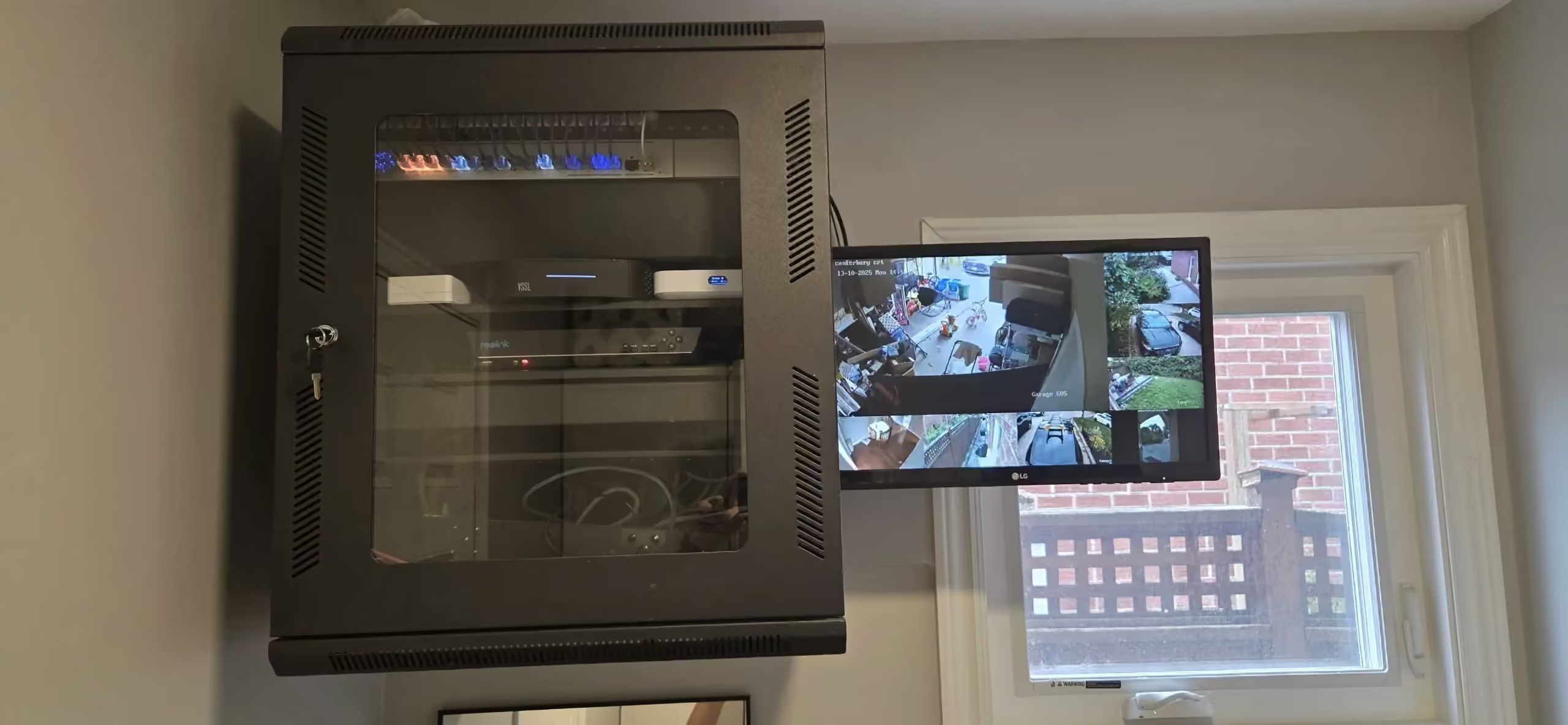
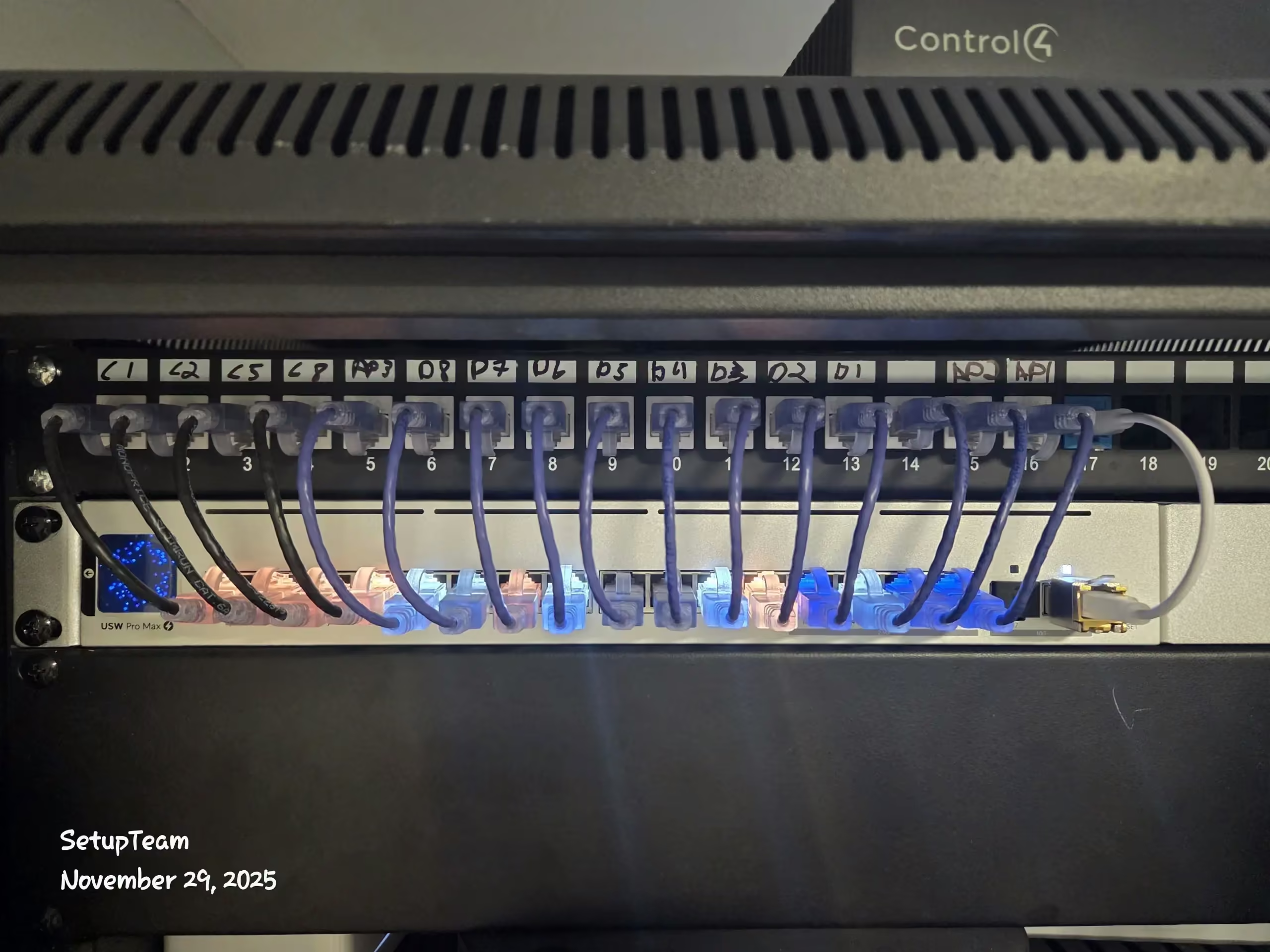
A labelled panel and a map of what lands where. On a recent house, we brought scattered runs back to one patch panel, marked each drop against the room it serves, laid out the rack so you can swap a switch without unpicking the bundle, and tested every line before the system went live. Anyone servicing it later can work from the labels instead of tracing cable by hand. If the house runs UniFi, we can also check the network remotely once the cable is in, with our UniFi security check-up: the look is free, and fixes are $299 + HST.
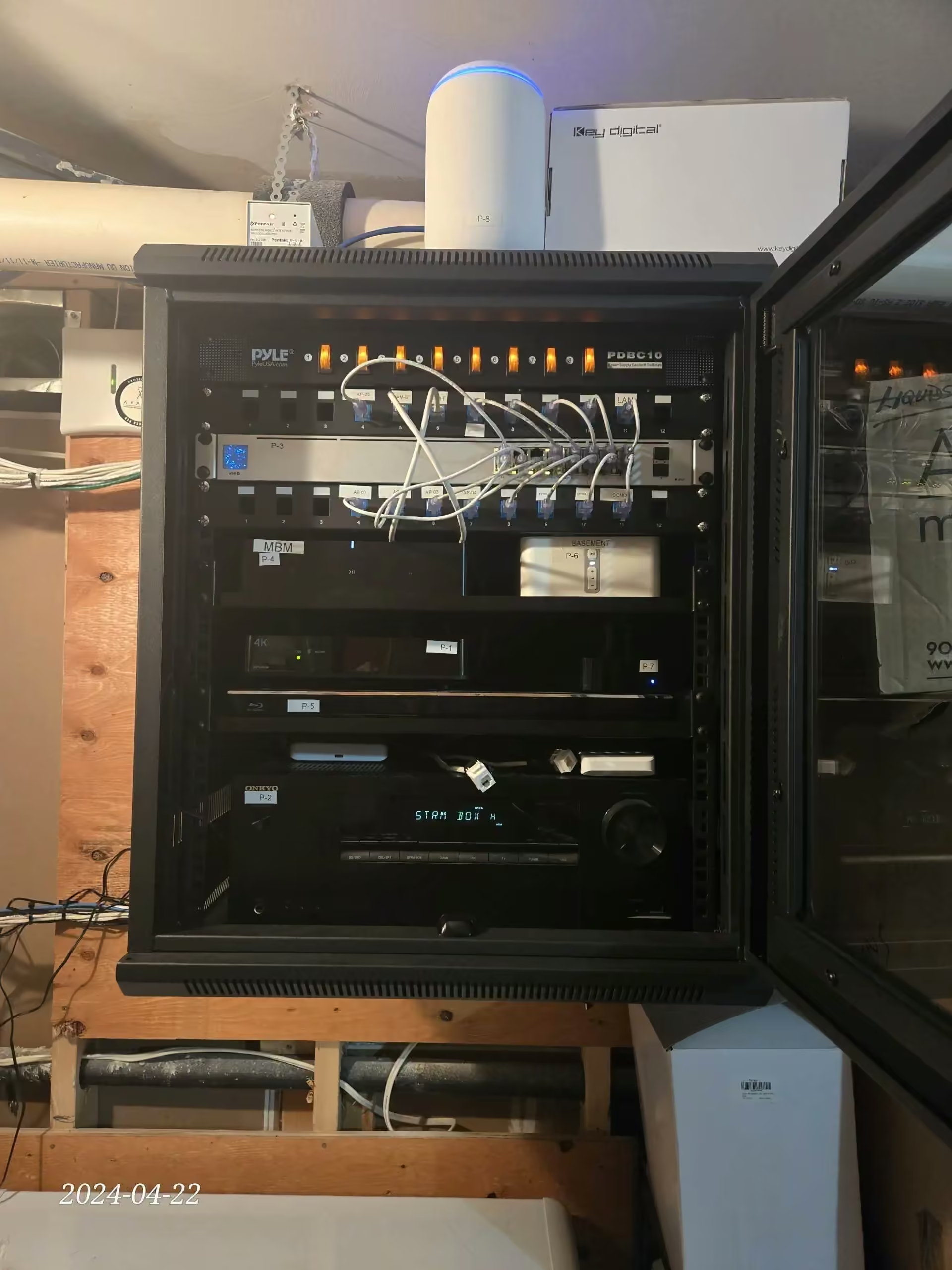
What the Homeowner Ended Up With
One rack, one panel, and drops that were fished in after the house was finished, with room left for the access points and AV zones that come next.
- Every run brought back to a single patch panel instead of a switch on a shelf
- Cat6 fished to the rooms that had no jack, terminated at keystone plates
- Rack laid out for service access rather than packed in to fit
- Each line tested and recorded on a cable map before handover
- Pathways left open for the drops the house has not asked for yet
Describe the Room and We’ll Tell You If It Can Be Fished
Send us the area you’re in, roughly when the building went up, which rooms need a drop, and what sits directly above or below them. That is enough for us to come back with a route, a scope, and a price.
Contact UsRetrofit Wiring FAQs
These are the questions people ask on the phone before booking: what the wall will allow, what gets cut, what it costs, and who owns the low-voltage scope on a renovation.
Network Installation Near You in the GTA
SetupTeam serves communities across the Greater Toronto Area.
Ready to Get Cable Into That Room?
Book a walkthrough for Ethernet drops, in-wall speaker wire, or access-point cabling in a house, condo, office, or bar that is already finished. Indoor, outdoor, or both, right across the GTA.

